When we think about Heart Health, the first nutrients that come to mind are usually omega-3 fatty acids, antioxidants or fiber. But one powerful, often overlooked nutrient is Vitamin K2—a vitamin that plays a surprisingly important role in protecting our arteries and supporting cardiovascular health.
What is Vitamin K2?
Vitamin K belongs to a family of fat-soluble vitamins with two main forms:
- Vitamin K1 (phylloquinone): Found in leafy greens; primarily supports blood clotting.
- Vitamin K2 (menaquinones): Found in fermented foods, animal products, and produced by gut bacteria; has a unique role in calcium regulation and heart health.
- Vitamin K3 (Menadione) is a synthetic, water-soluble form of Vitamin K, historically used in medicine and still used in animal nutrition. It can be converted into active Vitamin K2 (menaquinone-4, MK-4) in the body.
Unlike K1, Vitamin K2 directs calcium to the right places—like bones and teeth—while preventing it from being deposited in soft tissues such as blood vessels.
Why is Vitamin K2 Important?
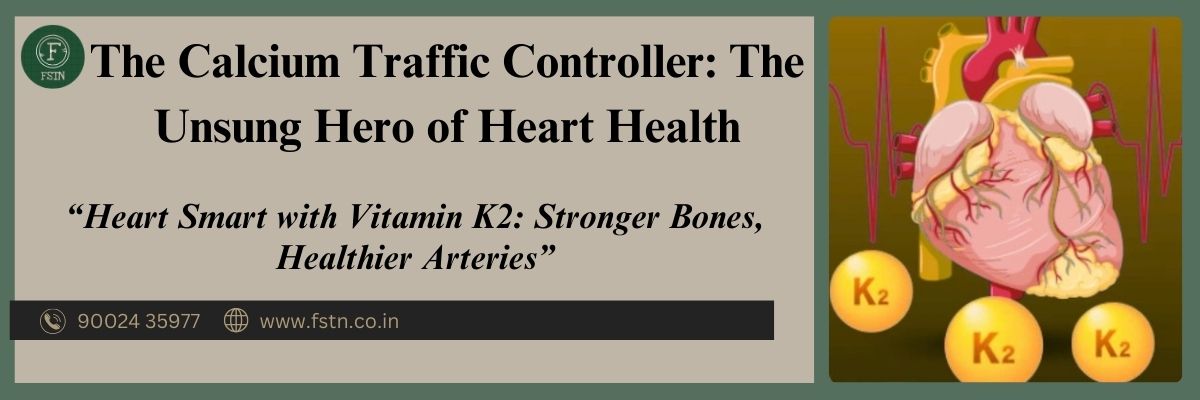
Think of Vitamin K2 as your body’s traffic controller for calcium. It tells calcium where to go: into your bones and teeth (where it belongs) and away from your arteries and heart (where it can cause damage). Without enough Vitamin K2, calcium can end up in your blood vessels, leading to arterial stiffness, blockages and a higher risk of heart disease.
The “Calcium Paradox”
Strong bones but weak arteries? That’s the calcium paradox.
Calcium is essential for strong bones, but when it settles in arteries, it contributes to arterial stiffness and atherosclerosis (plaque buildup). This “misplacement” of calcium is sometimes referred to as the Calcium Paradox. Vitamin K2 prevents this by activating special proteins that lock calcium into bones and keep it out of arteries.
Mechanism of Action; How Vitamin K2 steps in for Cardiovascular Protection
- Activation of Matrix Gla Protein (MGP): MGP is a potent inhibitor of vascular calcification. Vitamin K2 is required to carboxylate and activate MGP, preventing calcium deposition in arterial walls
- Osteocalcin Activation: Vitamin K2 activates osteocalcin, promoting calcium deposition in the bone matrix, thereby reducing circulating calcium available for vascular calcification.
Clinical Evidence
- The Rotterdam Study (Geleijnse et al., 2004): Higher dietary intake of Vitamin K2 was associated with a 50% reduction in arterial calcification and cardiovascular mortality.
- Prospective Cohort Studies: Regular intake of menaquinones, but not phylloquinone, is linked to lower incidence of coronary heart disease.
- Interventional Trials: Supplementation with Vitamin K2 (particularly MK-7) improves arterial stiffness indices and endothelial function.
Who Should Pay Attention to K2?
- People at risk of osteoporosis or heart disease
- Individuals on long-term calcium or vitamin D supplements (to prevent calcium misplacement)
- Those consuming limited fermented foods or animal products
Food Sources of Vitamin K2
Vitamin K2 isn’t as abundant in the diet as Vitamin K1. Natural sources include:
- Fermented foods and animal-based products provide the best source of Vitamin K2, especially in the form of MK-7 and MK-4, which are most bioactive.
- Natto (fermented soybeans, richest source; MK-7 subtype)
- Cheeses (especially hard/aged varieties; MK-9)
- Egg yolks, butter, organ meats (MK-4 subtype)
How Much Do You Need?
There is no universally established daily requirement for Vitamin K2 yet. However, experts suggest that 90–180 mcg per day may support bone and heart health. Supplements (especially MK-7 form) are also available for those with low dietary intake.
Final Thoughts
Vitamin K2 is like a “heart protector.” It might not get as much attention as other heart-protective nutrients, but its role is crucial. By guiding calcium to the right places, it keeps bones strong and arteries flexible—two key pillars of healthy aging and cardiovascular protection.
If you want to give your heart some extra support, don’t just think about cholesterol and blood pressure—think about Vitamin K2 too.