Disclaimer: For the best reading experience and optimal visibility of this blog, we recommend viewing it in your device's Default or Light Mode. Display quality may vary when using Dark Mode.
In today’s hyper-connected world, screens surround us at every turn. From smartphones and laptops to TVs and tablets, we’re spending more of our daily lives immersed in the glow of rectangles.
A digital detox—purposefully stepping away from phones, laptops, and other screens for a set period—can do far more than just reduce screen time. It helps clear mental clutter, improves concentration, eases stress, and allows you to reconnect with your thoughts, surroundings, and the people around you. By unplugging, even briefly, you create space for deeper focus, better emotional balance, and a renewed sense of presence in everyday life.
Positive and Negative Impact of Digital Devices Use
- Smartphones have become central to modern life, making communication, navigation, entertainment, and access to information easier than ever. Their convenience helps people stay connected and engaged throughout the day.
- At the same time, increasing attention is being placed on the potential drawbacks of heavy smartphone use. Excessive screen time has been linked to poorer mental health, lower overall well-being, disrupted sleep and eating patterns, reduced physical activity, and more sedentary lifestyles. Smartphones also encourage behaviours like phubbing and can trigger feelings of nomophobia or fear of missing out.
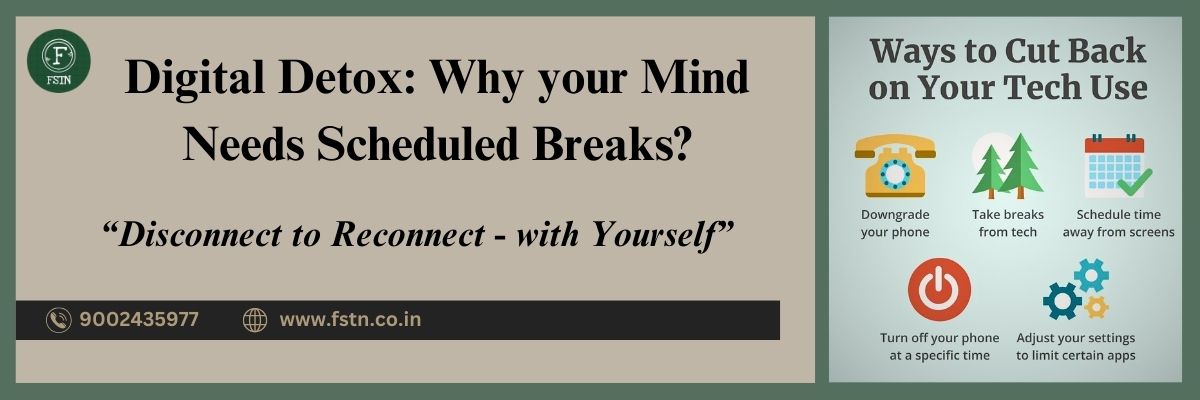
- These effects should not be overstated, concerns among the public continue to rise. As a result, many individuals are exploring ways to create healthier digital boundaries—switching to simpler phones, taking intentional digital detoxes, or using tools like Screen Time and Digital Well-Being to monitor and regulate their habits.
Social Media Digital Detox and Its Impact on Health
- Although digital detoxes are increasingly popular,focuses on mental and social outcomes—such as well-being, stress, anxiety, life satisfaction, and depression. Clear benefits are mainly seen in reduced depression and smartphone addiction, while results for other outcomes vary.
- A key challenge is the lack of objective, device-based usage data and limited follow-up assessments. Complete avoidance of smartphones or social media is unrealistic; future detox approaches should instead encourage balanced and mindful use.
- Physical health effects, including sleep, activity levels, and eating behaviours, are even more scarce and inconclusive. More rigorous health impacts of digital and social media detoxes are yet to come.
Take a Break from the Digital Noise- End note
In an always-connected world, scheduled digital detoxes are no longer a luxury—they’re a necessity for protecting mental clarity, emotional balance, and overall well-being. Regular breaks from screens give the mind space to reset, reduce cognitive overload, and restore focus. They help interrupt unhealthy patterns of constant scrolling, comparison, and over stimulation, allowing you to reconnect with your thoughts, your environment, and the people around you. By intentionally unplugging, even for short periods, you create healthier boundaries with technology and support a more mindful, balanced, and sustainable relationship with your digital life.